Walking the Strandir Coast, 2002
ChatGPT Translation
Walking in the Strandir Region, 2002
The three of us set out from Reykjavík on Tuesday morning, July 23rd, at eight o’clock. This time there were only three of us, despite hopes that more people would join the trip. Reynir Engilbertsson was unable to come along, having other commitments, and although several others (including two women) had almost decided to join us, they ultimately lost their nerve when the time came.
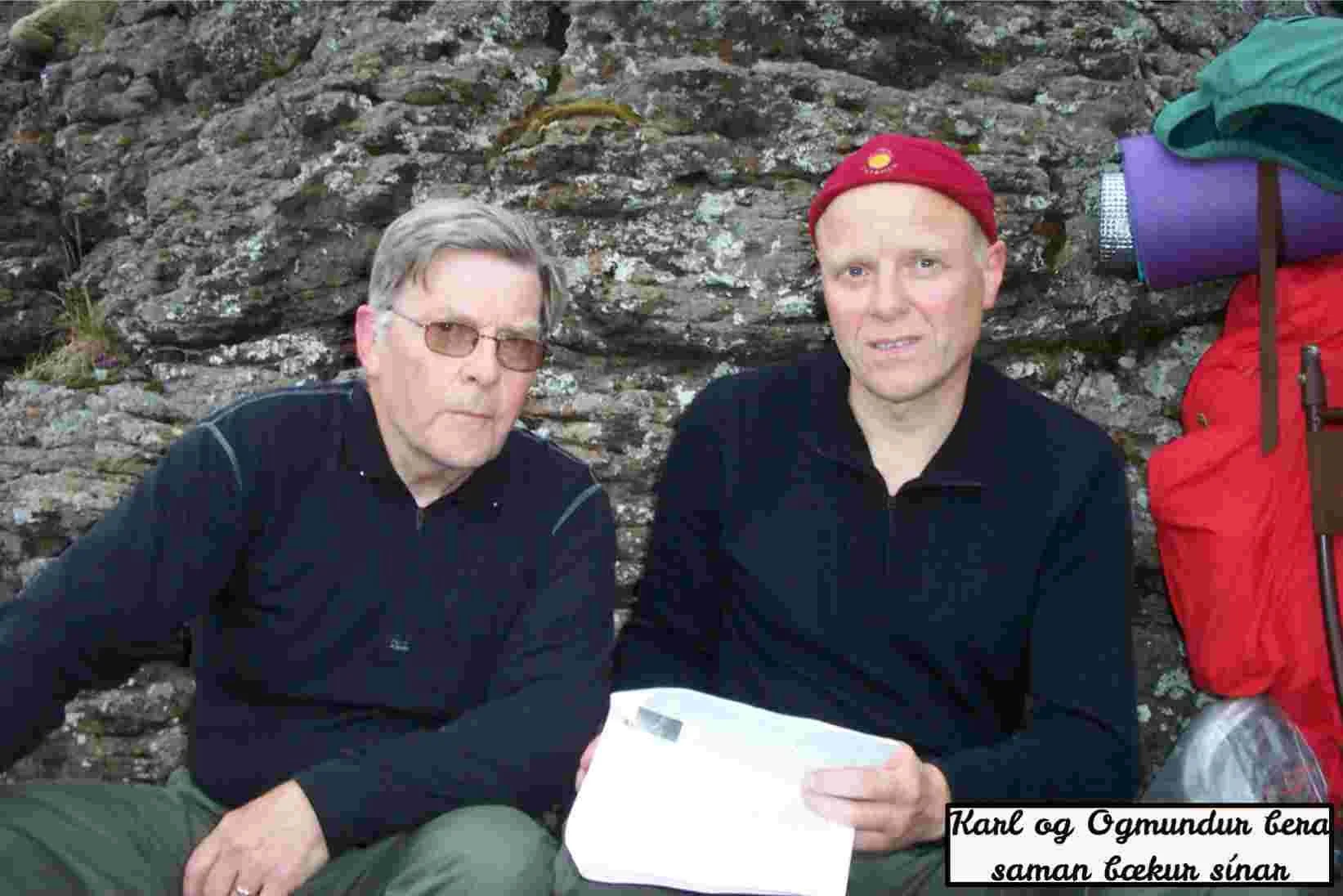
Ögmundur, Þorkell, and Karl Valgeir, however, were not deterred in the slightest, and what follows is the travel account, written by Karl and reviewed by Þorkell and Ögmundur.
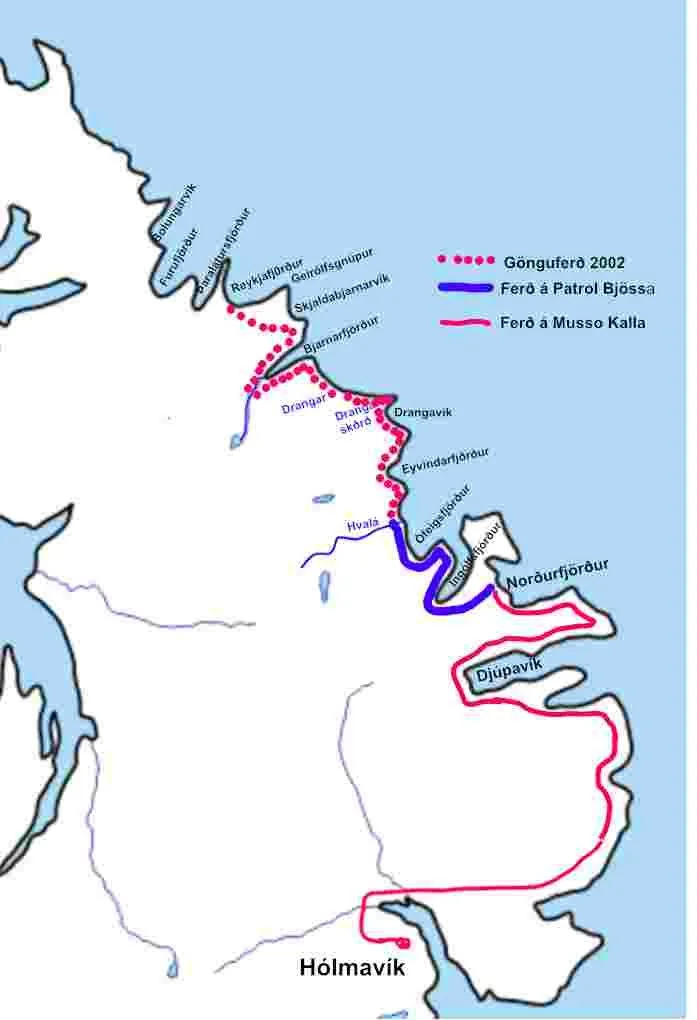
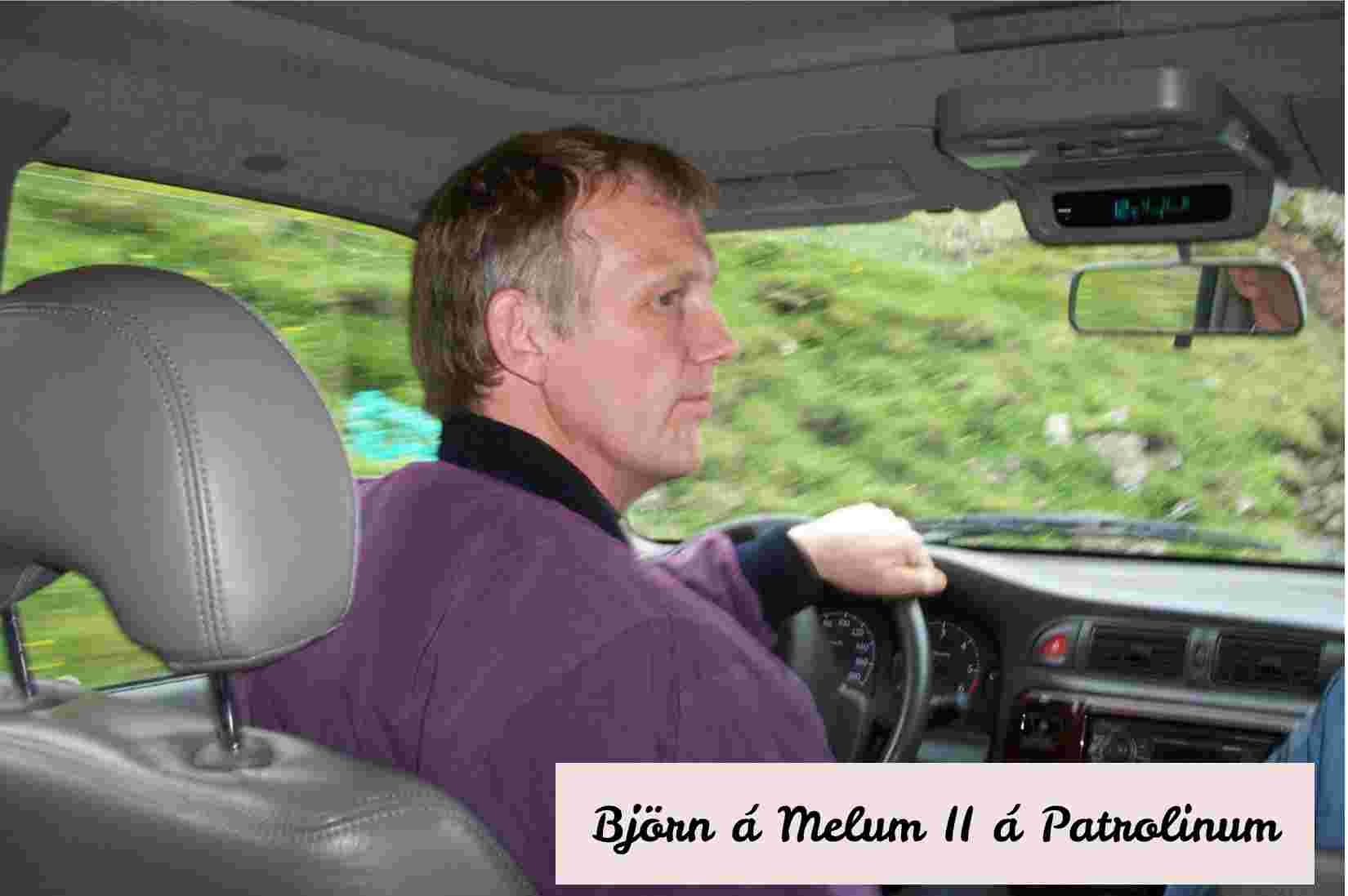
We drove north toward Hólmavík in Kalli’s “Musso,” from where Þorkell traces his roots. We briefly greeted Þorkell’s closest relatives and enjoyed an excellent meal at Hotel Riis. From there we continued north to Norðurfjörður in Árneshreppur. Just before reaching our destination, we stopped at the farm Melar II to visit Björn the farmer and his wife Bjarnheiður. We were warmly welcomed and offered coffee and cakes, as Badda is an old friend and schoolmate of Þorkell.
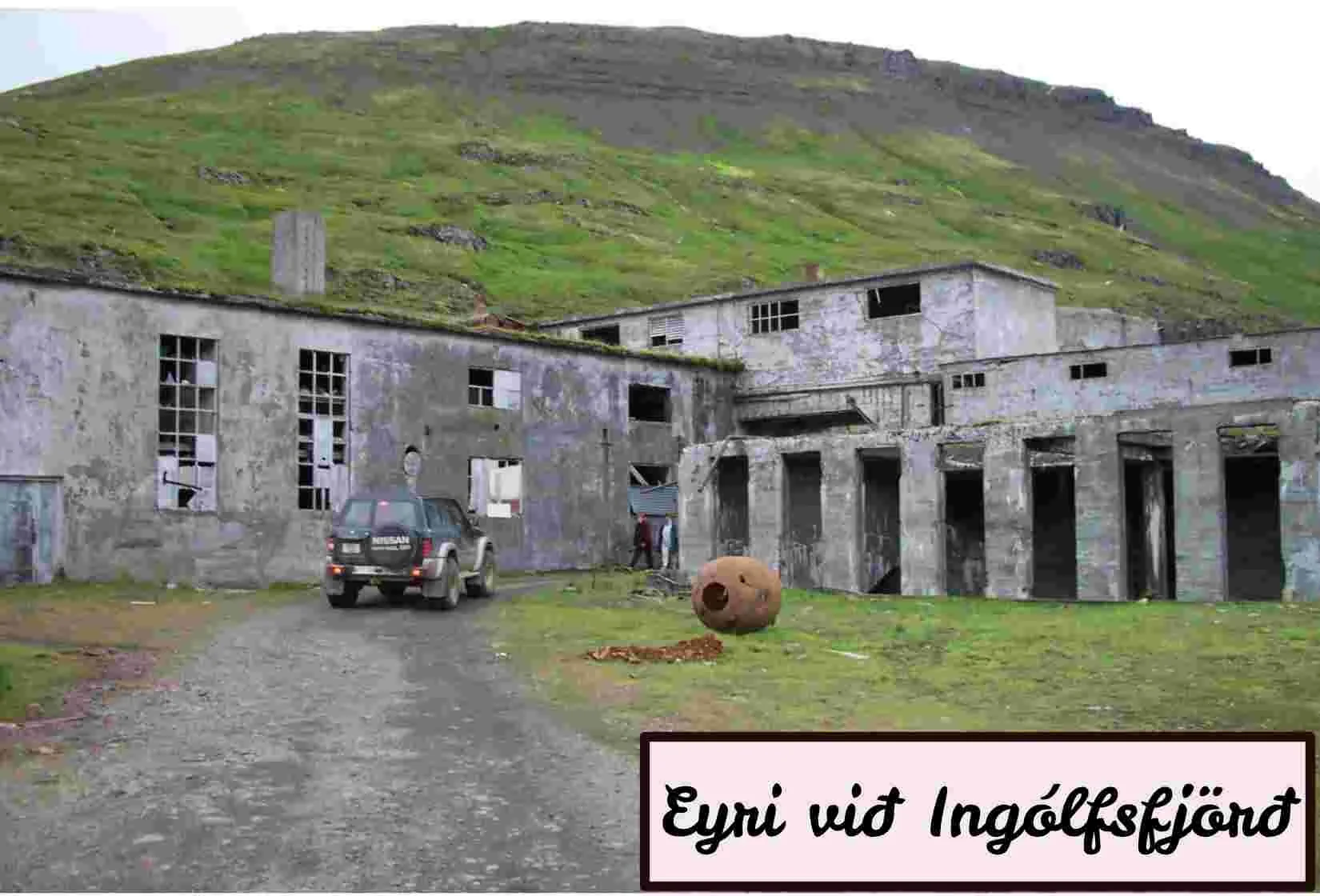
It was agreed that Björn would drive us from Norðurfjörður as far north as the jeep track would allow. It was essential to leave the Musso ready at the dock in Norðurfjörður, where we planned to land after our sea journey from Reykjafjörður. The final stretch, beyond Eyri in Ingólfsfjörður, was a true jeep track, largely driven along the shoreline. While passable for experienced drivers, it cannot be traversed at high tide without driving partly through seawater.
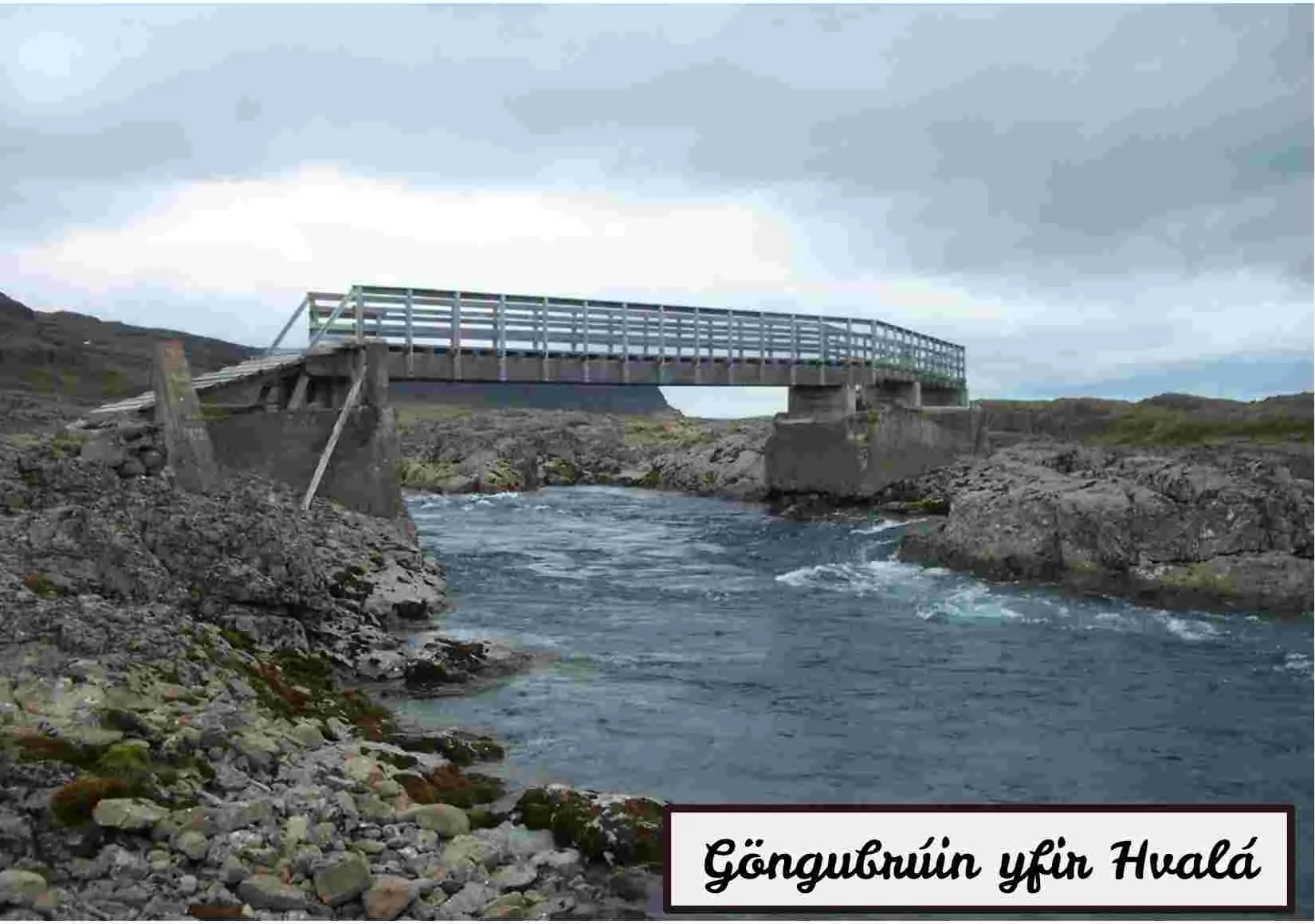
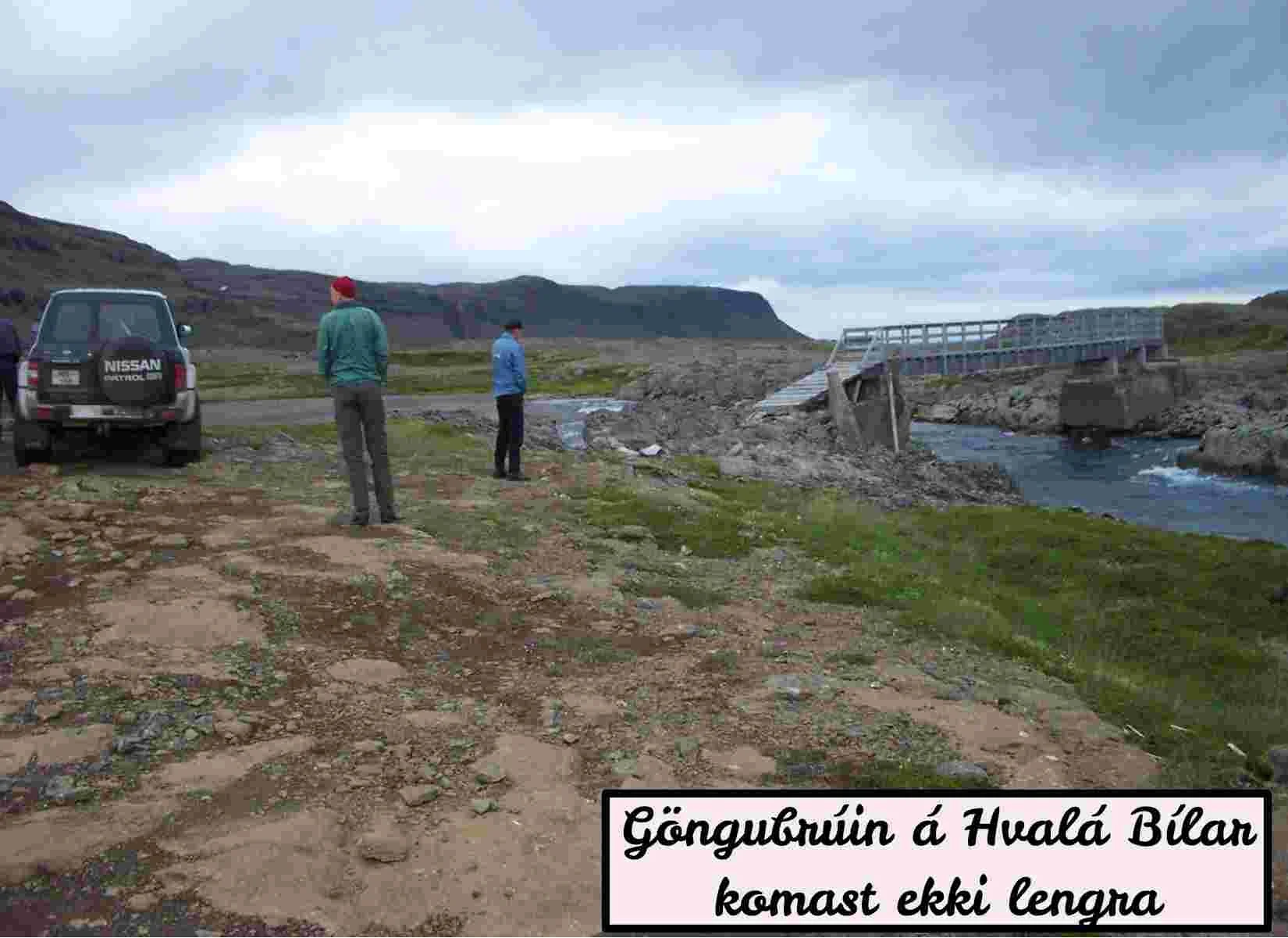
At the river Hvalá, the track ended, and we were very glad to finally begin the hike. We said farewell to Björn of Melar II, shouldered our packs, and crossed the Hvalá. Fortunately, a well-built footbridge spans the river, which otherwise would have been difficult to cross. This is a powerful mountain river that some believe may one day be harnessed for hydroelectric power.
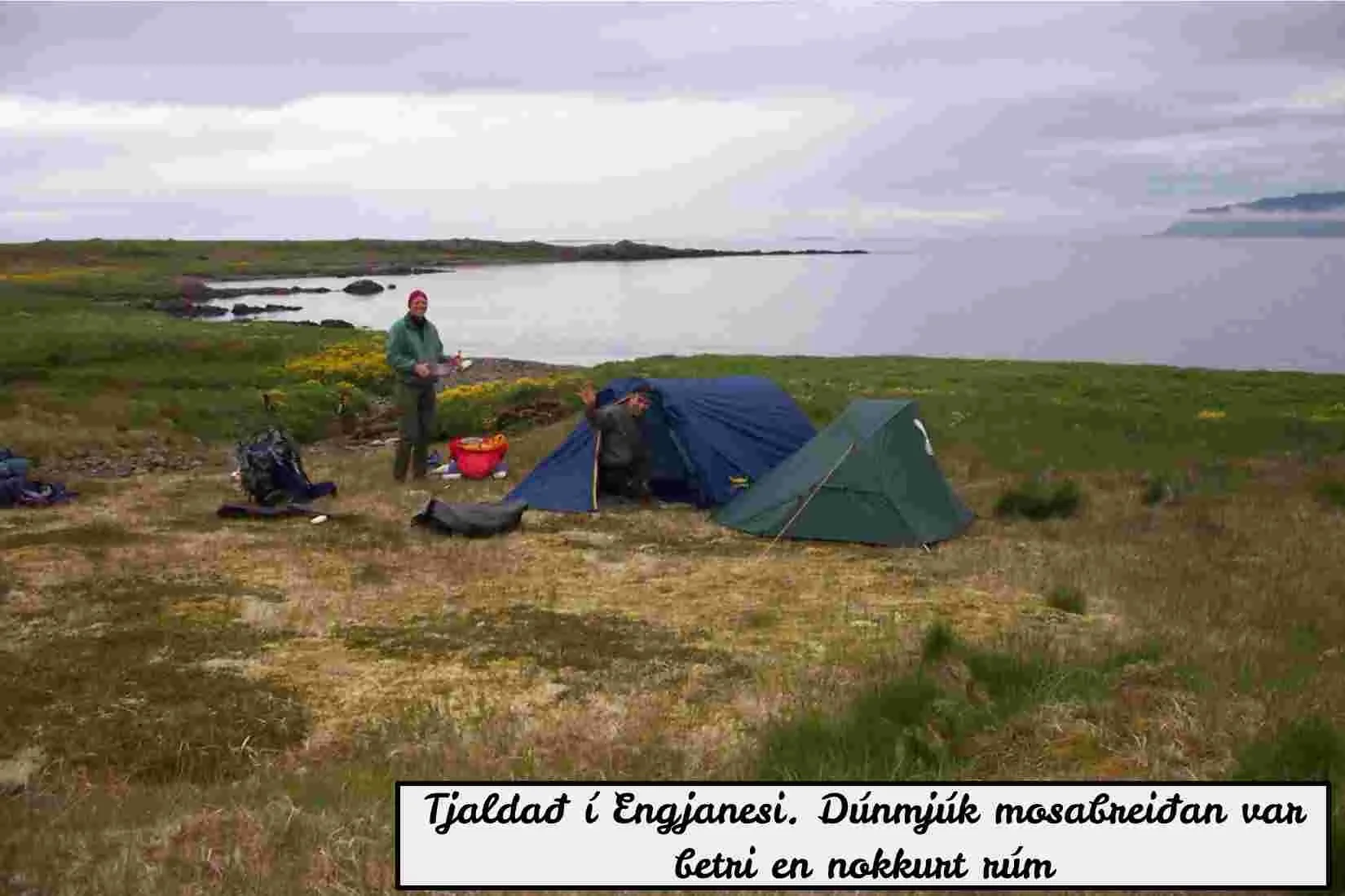
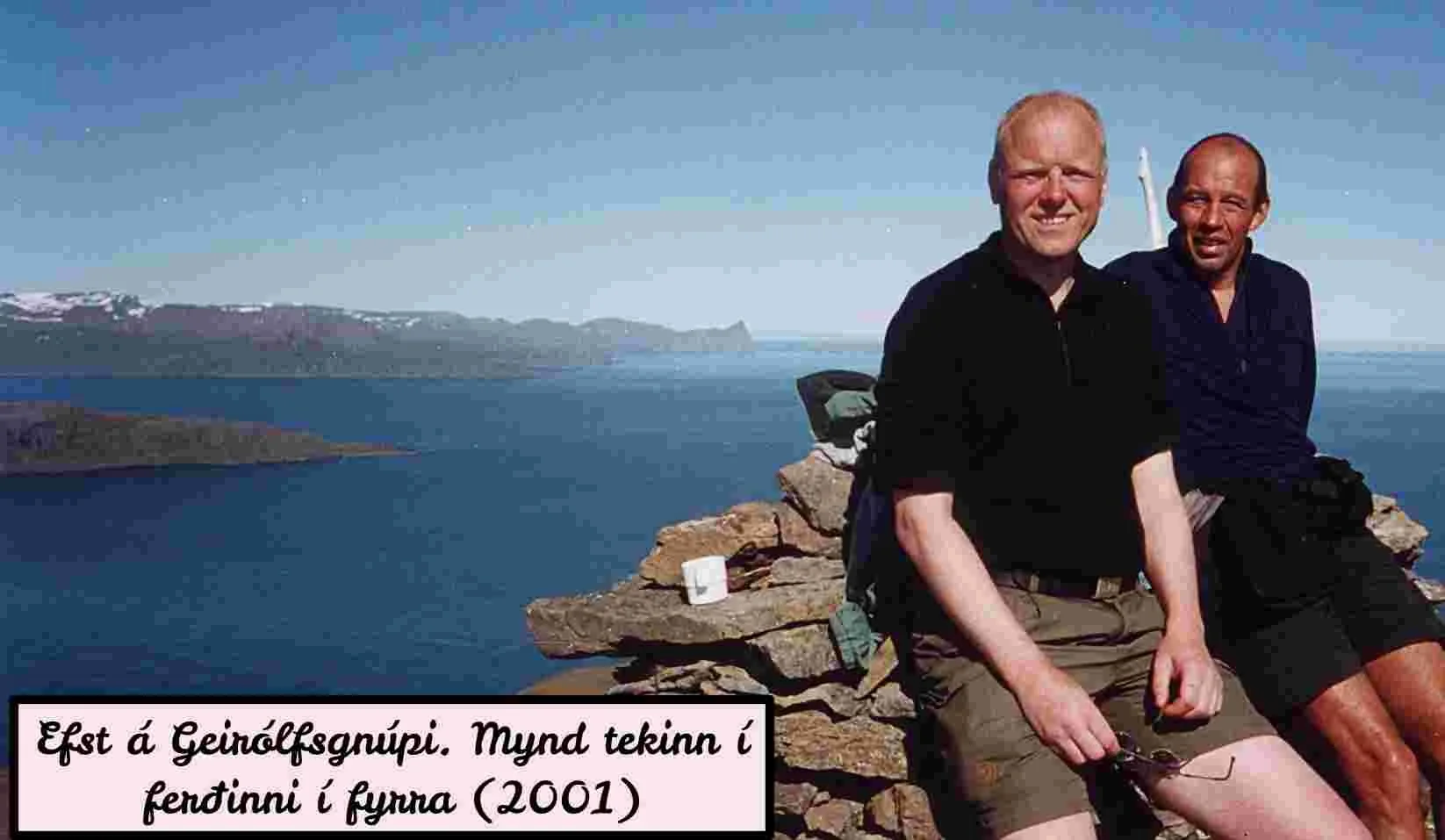
It was about six in the evening. Our goal for that Tuesday was to walk for roughly four hours and reach Engjanes in Eyvindarfjörður. The weather was excellent for hiking, as can be seen in the accompanying photographs. We followed the coastline and made good progress, crossing the Eyvindarfjörður River on two sturdy bridges and following a sometimes indistinct trail. We reached Engjanes around half past ten and pitched our tents in calm, pleasant weather. Ögmundur and Þorkell shared the larger tent, while Karl slept in his new one-man tent.
Wednesday, July 24th
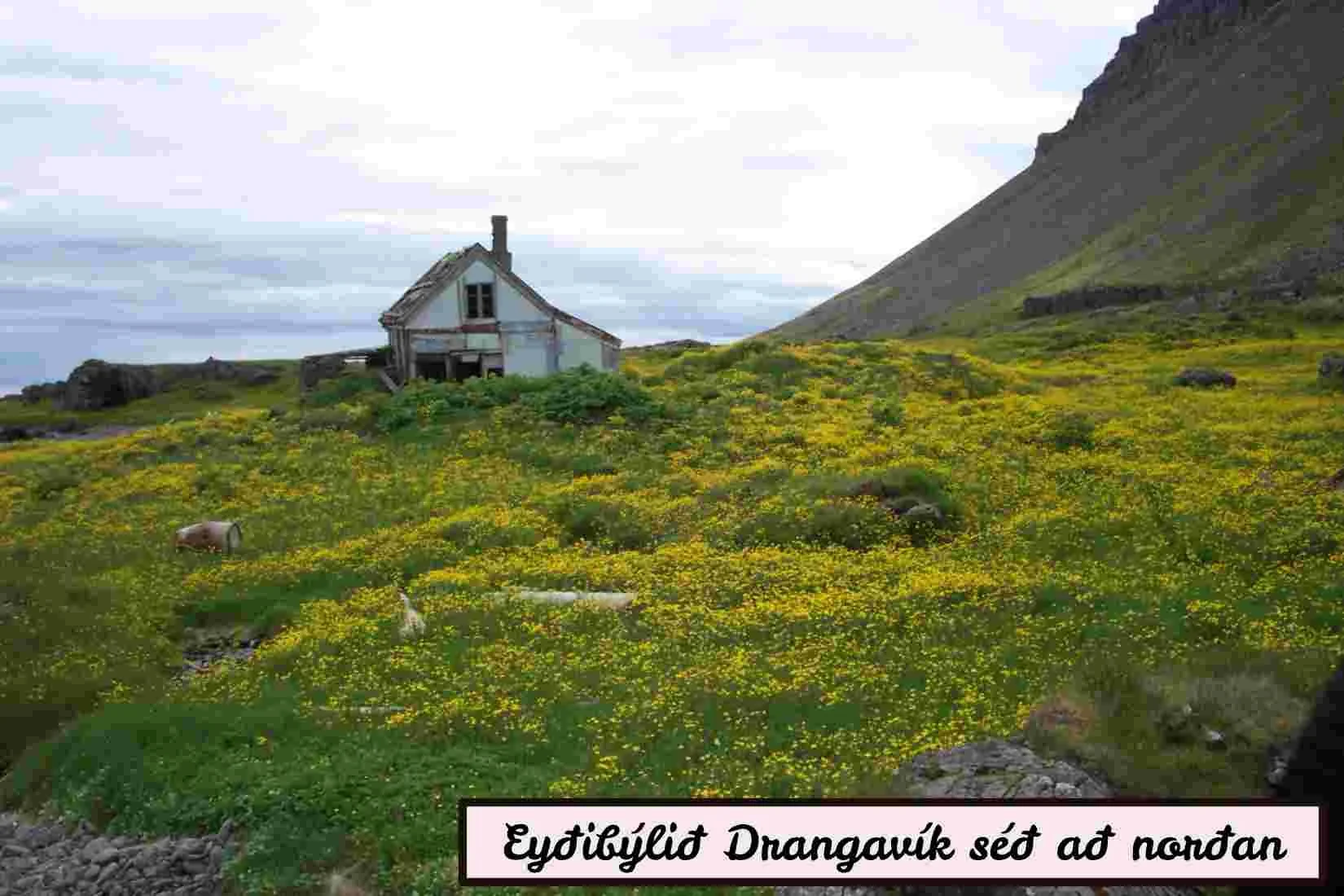
The next morning we awoke to fine weather after a restful night’s sleep. We cooked soup and ate packaged breakfasts, having learned from unpleasant noodle experiences on earlier trips to avoid such meals. After packing up camp, we set off toward the abandoned farm of Drangavík.
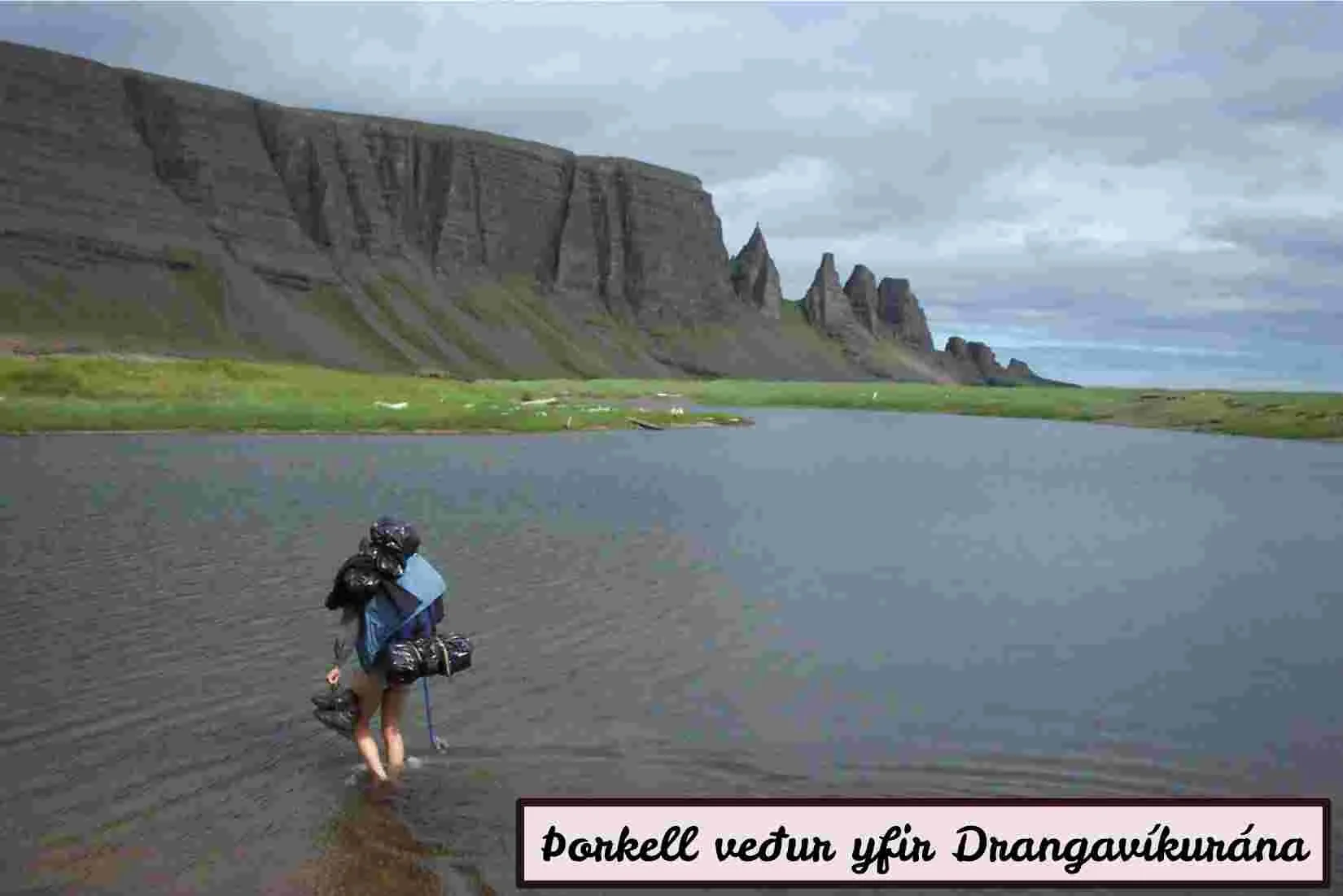
After taking in the overgrown, almost fairy-tale-like condition of this ancient settlement and refreshing ourselves with food and drink, we continued toward Drangar. Shortly north of Drangavík we encountered the river Drangavíkurá, which we had to ford—an easy task for experienced hikers.
The Drangar passes were now within reach, and we had to decide whether to take the shorter route across Drangaheiði (about 360 meters high) or follow the boulder-strewn shore and climb one of the mountain passes. We chose the more challenging option: the rocky shoreline and the ascent of Signýjargötuskarð. Þorkell briefly climbed Stóraskarð without his pack to confirm it was passable. The ascent of Signýjargata was steep and somewhat intimidating for those afraid of heights, though the descent on the northern side was gentler.
From the top of the pass, we admired the view both north and south. To the north lay Geirhólmur, jutting out beyond Mount Rönd, and to the south the most prominent peak was Kálfatindur.
Drangahlíð, the slope north of the passes, was peaceful and beautiful, as most hikers choose the route over Drangaheiði. We saw clear signs of a fox den, and upon closer inspection spotted a half-grown cub gazing curiously at us from one of the holes. We returned the gaze and respected its solitude in this untouched wilderness.
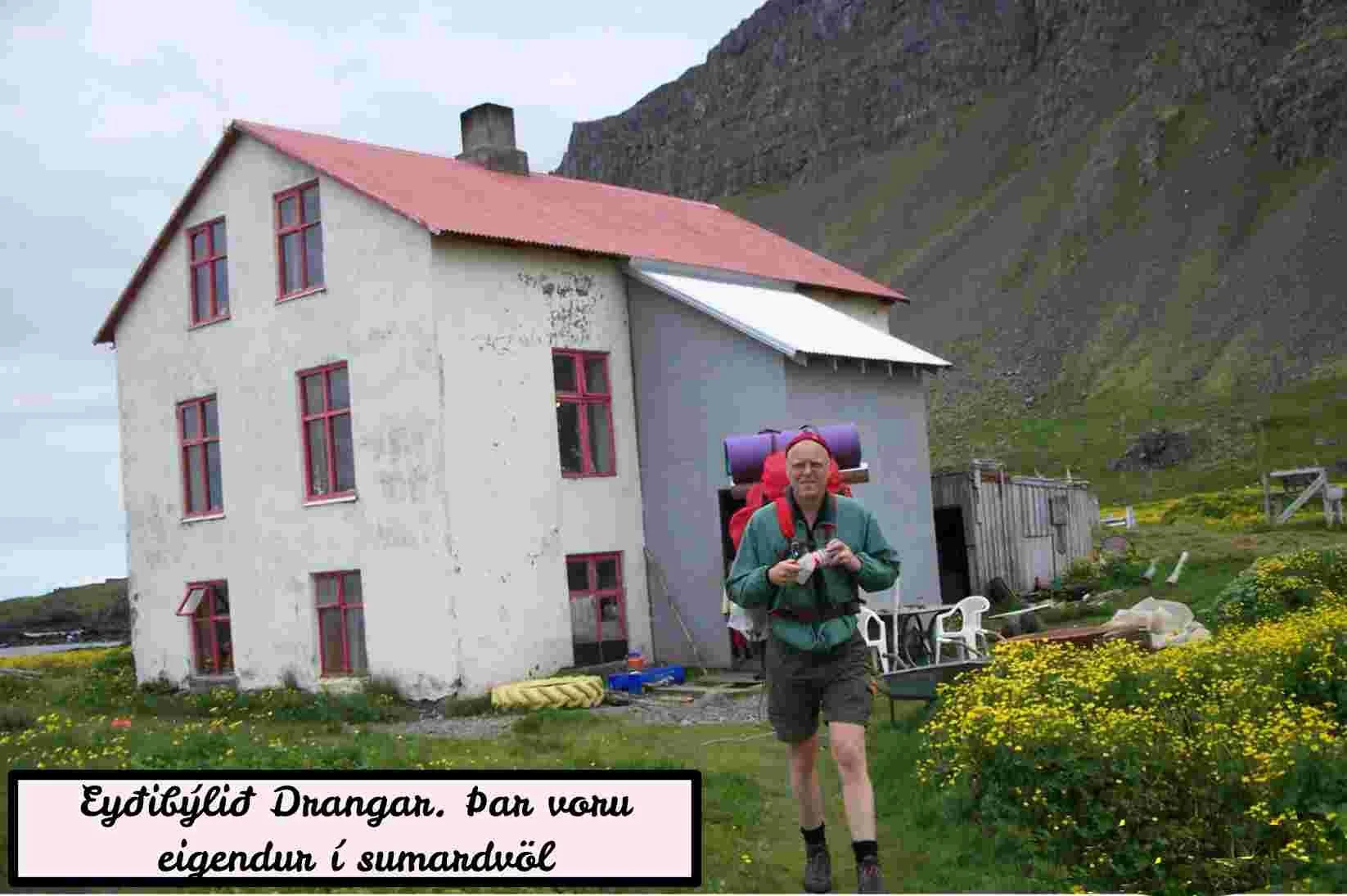
Gradually we approached the farm at Drangar, once a large holding by earlier standards. The buildings had been reasonably maintained, and the owners typically stayed there during the summer. At the time, many people were present: women tending to children and laundry near the farmhouse, while the men cut driftwood by the shore. We greeted the residents and received permission to bathe in a hot pool just north of the fields.
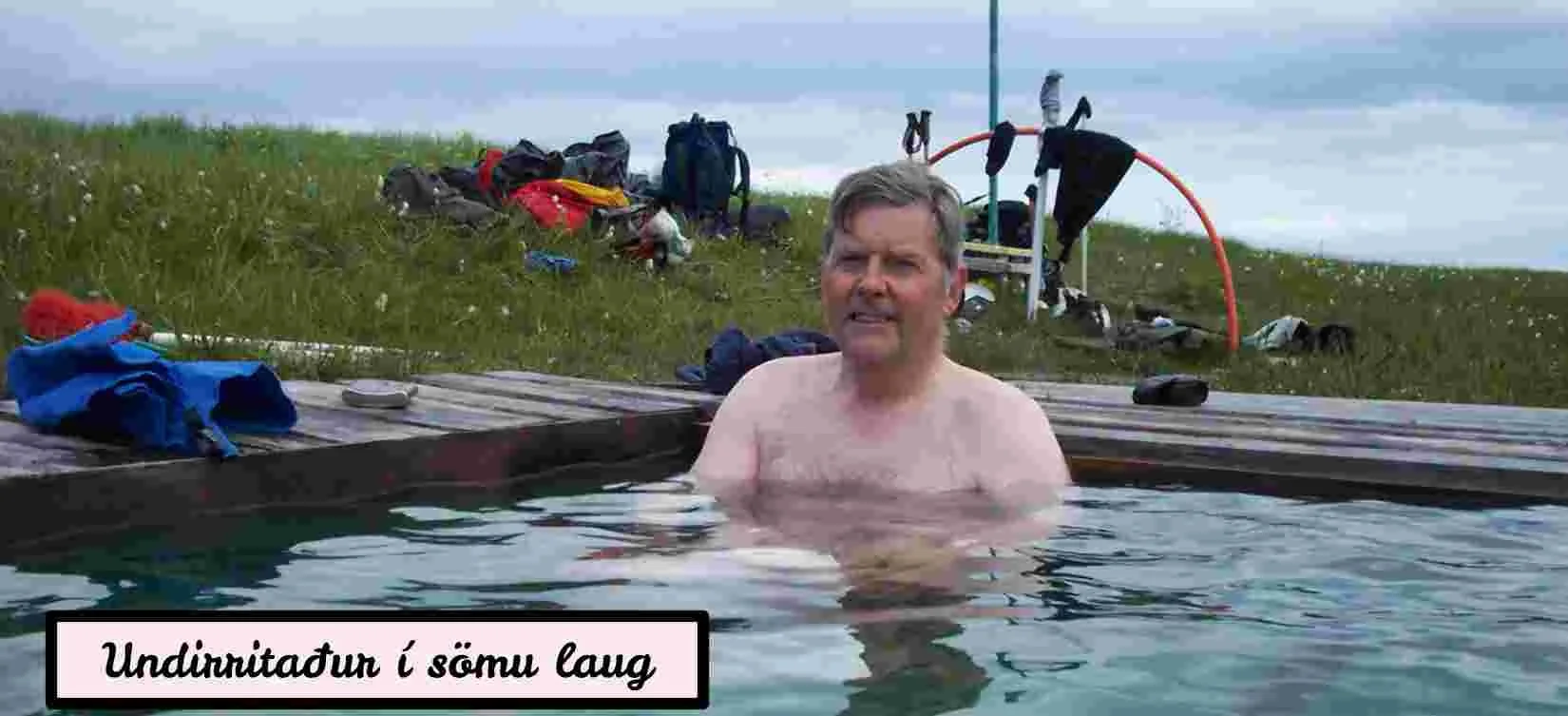
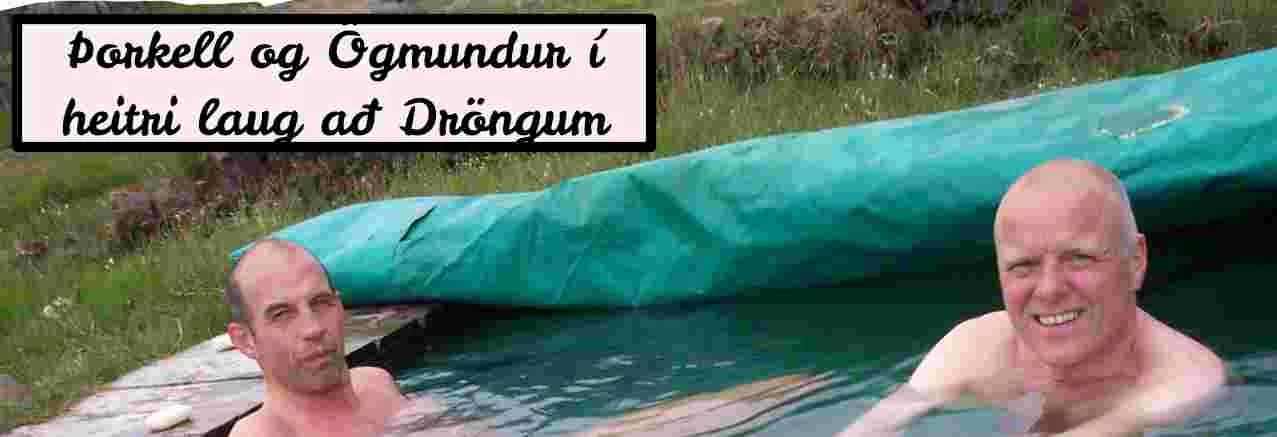
To cross the Húsá River we had to walk some distance inland to a footbridge. The landowners had constructed a very comfortable hot tub there, extremely hot and large enough for at least ten people. Lacking cutlery, towels, or modesty, we bathed naked, as nature intended.
A second pool lies further inland, entirely natural but only large enough for two or three people at a time.
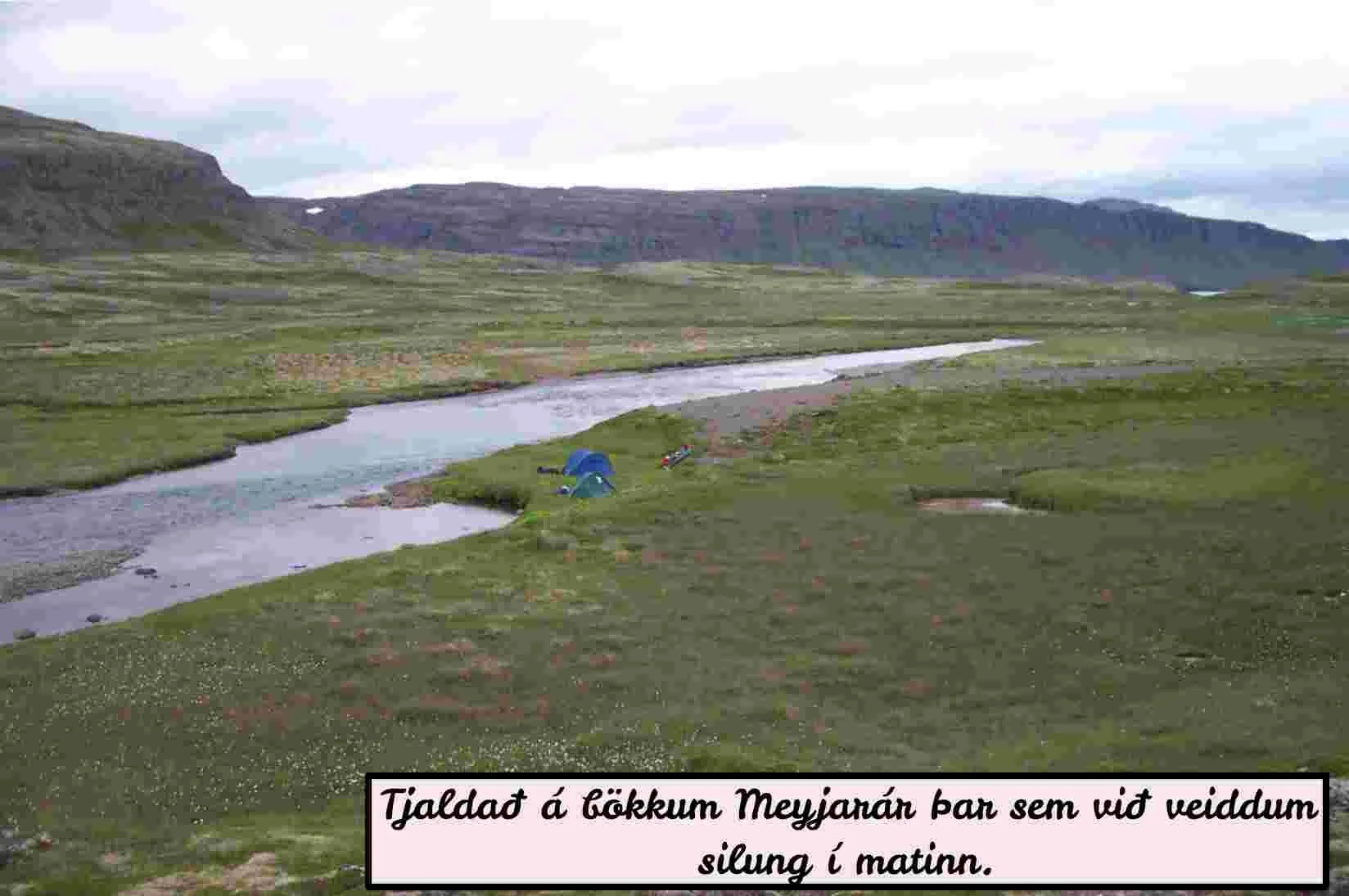
The pleasure was only enhanced when yours truly produced a refreshment known as Glenmorangie and shared it with his companions. Fully refreshed, we continued our hike toward Krákutún, near the banks of the Meyjará River, where we planned to camp. Though the distance was short, we felt we had earned a restful evening.
We set a short net in the Meyjará and then explored, without packs, the ruins at Krákutún, Meyjarsel, and Fauskavík. After cooking an excellent packaged meal, Ögmundur shared his notes and enlightened us about the area’s history. Before turning in, we checked the net and saw that a fish had already been caught.
Thursday, July 25th
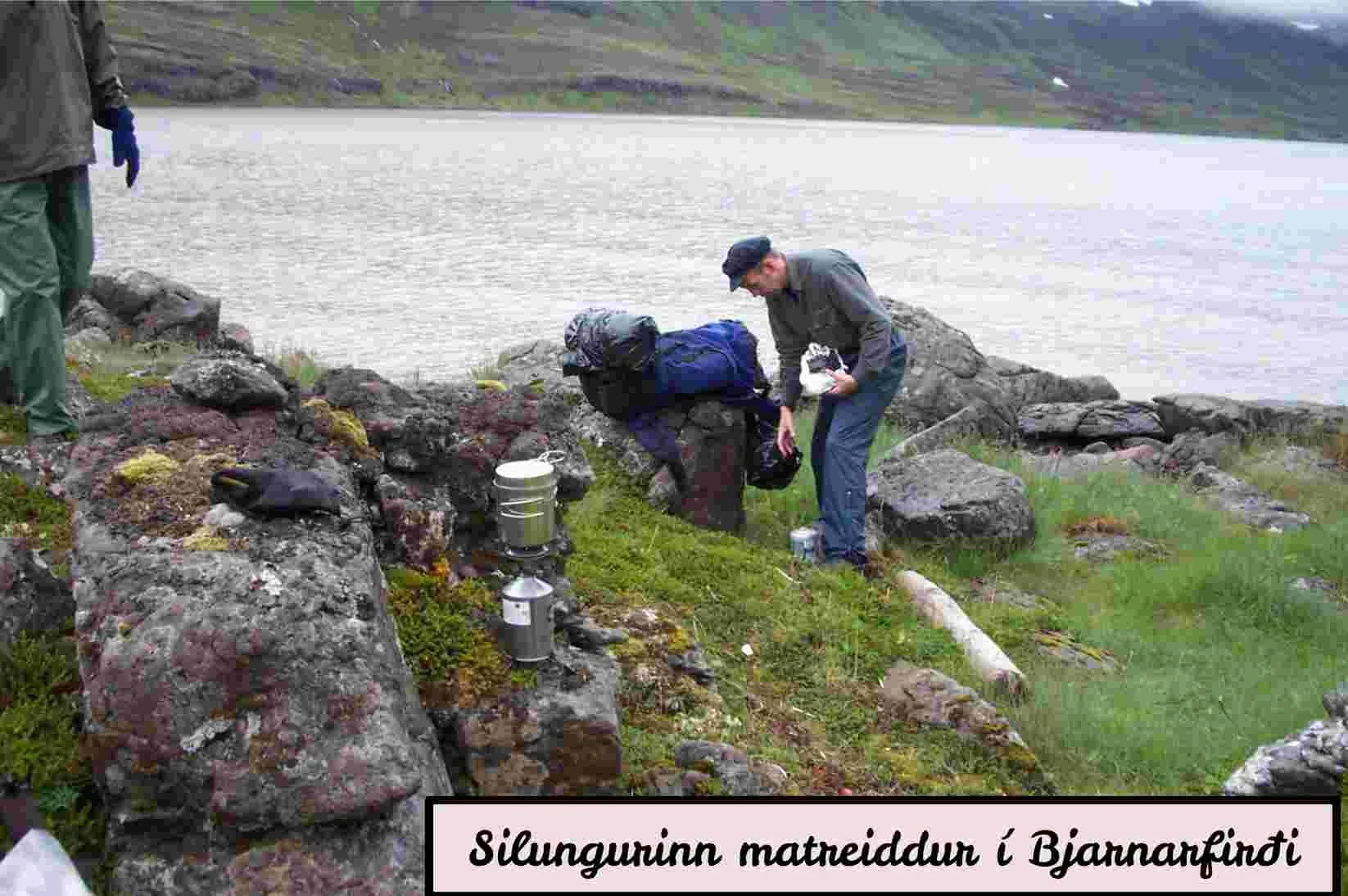
We awoke around eight to mist and drizzle, with clouds clinging to the mountains. After heating water from the Meyjará for breakfast, we packed up and waded across the river. When we hauled in the net, we found a large sea trout—about four pounds—which Ögmundur carried until it was cooked later that day.
Our route now led along the long Bjarnarfjörður (not to be confused with another fjord of the same name north of Steingrímsfjörður). Progress was slow as the trail alternated between steep cliffs and the shoreline, crossing numerous gullies and swollen streams fed by the drizzle.
Near the head of the fjord, we stopped for lunch and enjoyed boiled sea trout with butter and crispbread. Wearing rain gear for most of the day made the hike more difficult. At the estuary of Bjarnarfjörður, high tide prevented us from crossing the mudflats as recommended in the guidebook. Instead, we followed the glacial river upstream in search of a ford.
Þorkell showed remarkable courage by entering the river where it widened. He reached halfway across before encountering a deep channel and had to retreat, wading upstream against the current until he found firmer footing. There, he managed to cross the deep channel, wading nearly waist-deep. Ögmundur and I followed the same route, and though cold, the crossing was successful.
No photographs were taken here, as concentration was required and the weather was unpleasant.
After changing out of our wading shoes and resting briefly, we continued along the northern side of the fjord. Though we could have crossed Fossadalsheiði to reach Reykjafjörður that evening, our plan was to follow the headlands and visit Skaufasel and Skjaldabjarnarvík. The guide warned that this route could be hazardous for those afraid of heights, particularly at a narrow ledge called Svaði, where the path runs above a sheer drop with crashing waves below.
While my companions were unfazed, I am somewhat prone to vertigo. Nonetheless, I managed the passage with my pack and without a safety rope—though admittedly quite frightened.
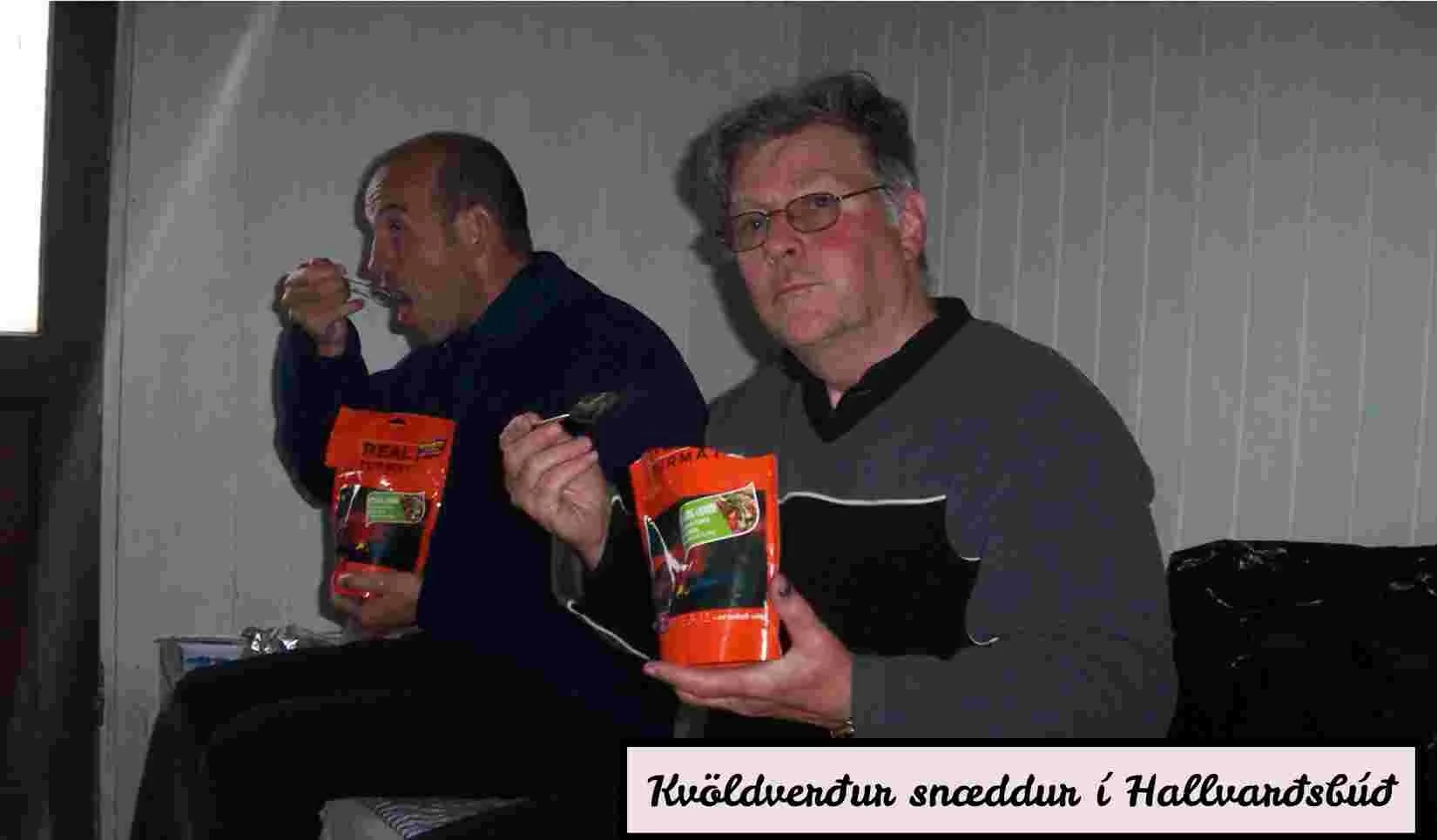
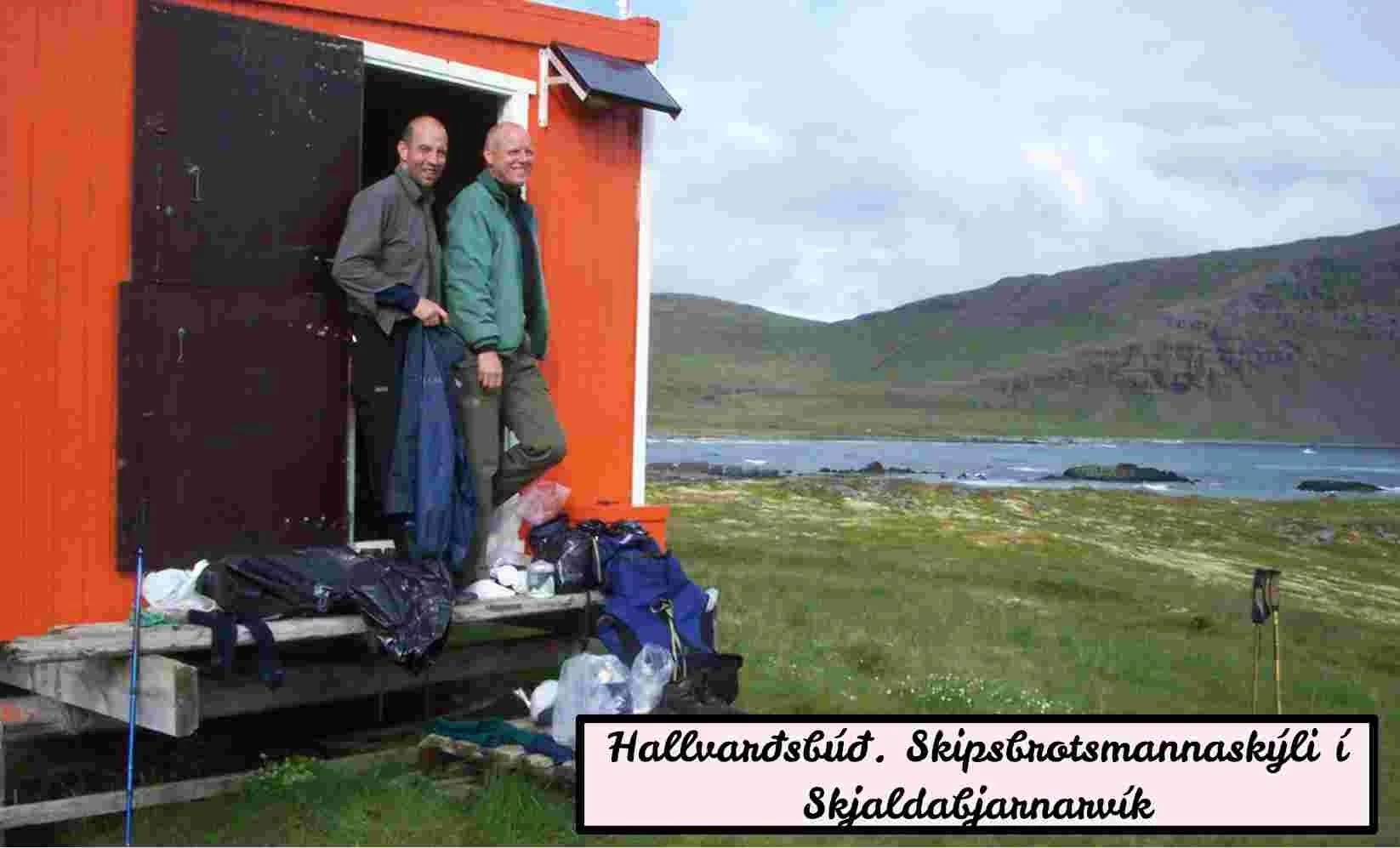
We soon reached Skaufasel, with its old fishing ruins and extensive remains. That evening we arrived at Hallvarðsbúð, a shipwreck shelter in Skjaldabjarnarvík, much to our relief after a day of wet feet.
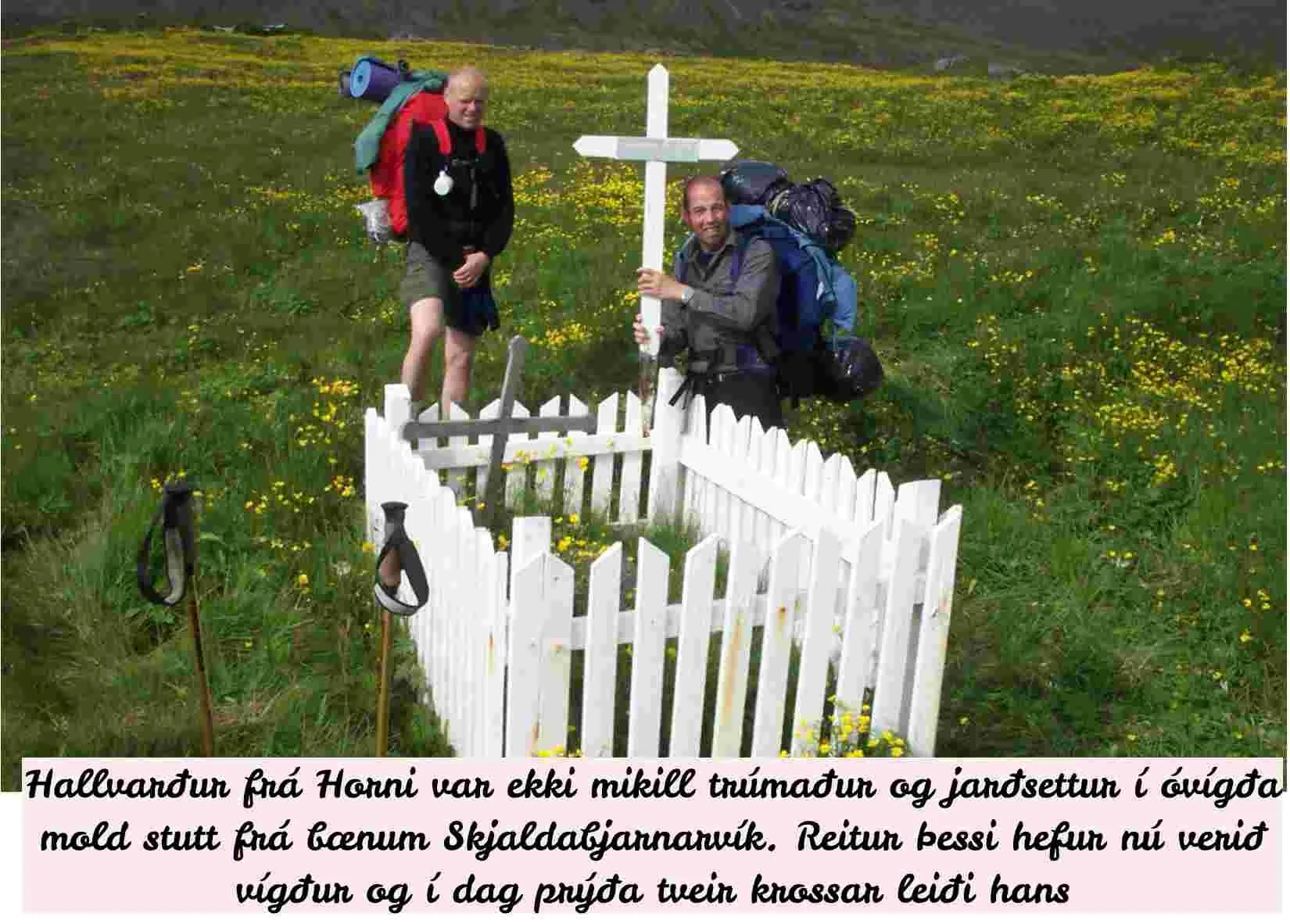
The shelter was spacious and well equipped, maintained through a fund established in memory of Hallvarður from Horn, who is buried nearby. We slept peacefully there, the two younger men in a wide bed, while I slept on the floor. Ögmundur provided an excellent dessert, ensuring good spirits and sound sleep.
Friday, July 26th
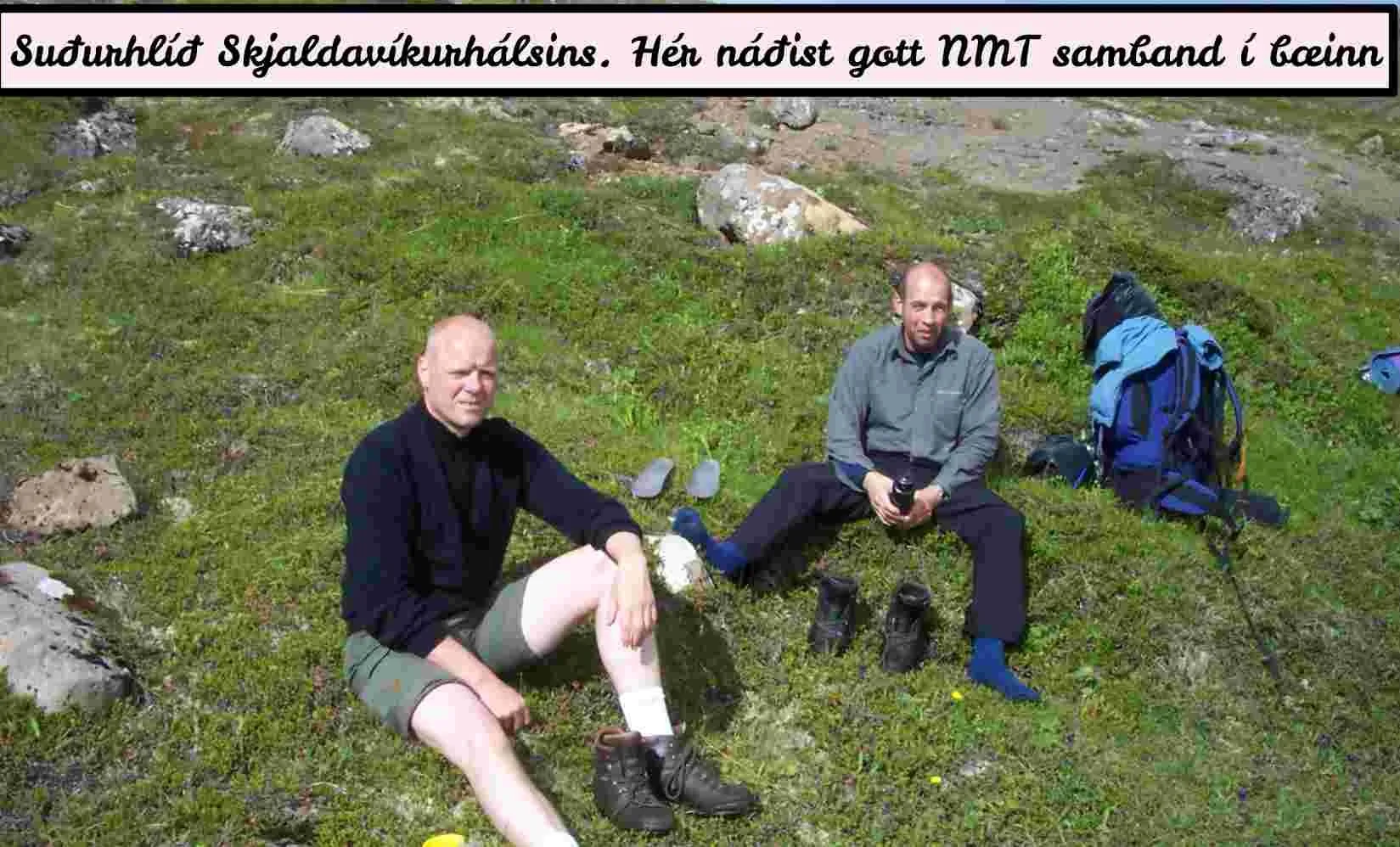
We awoke refreshed, having managed to dry our shoes somewhat. The weather was calm but overcast—far preferable to rain. We explored the ruins at Skjaldabjarnarvík, once a large farm, fording the swift but shallow Sunndalsá. After paying our respects at Hallvarður’s grave, we continued up Nordalur and over Skjaldavíkurháls, following faint but passable paths.
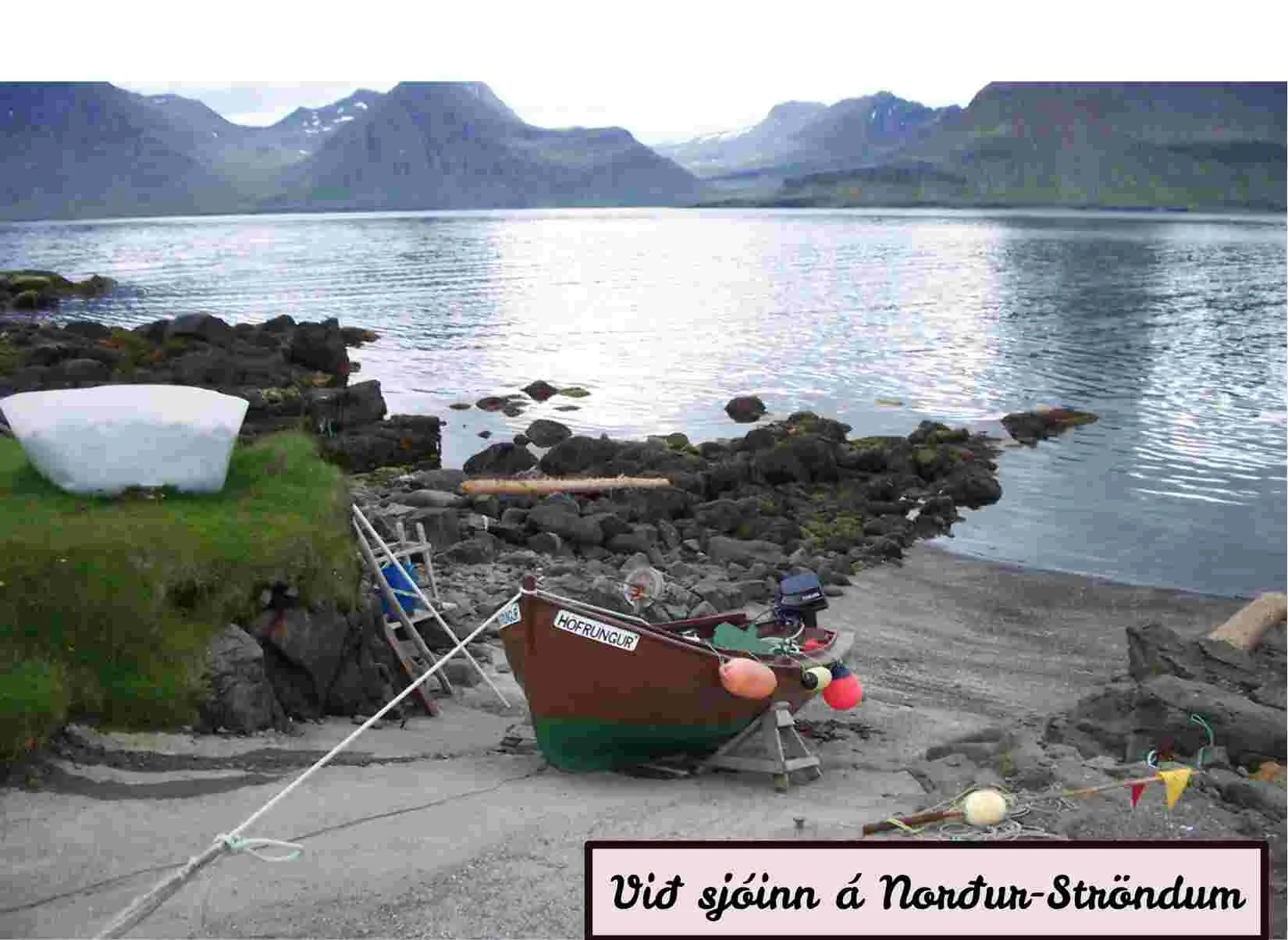
We skipped climbing Geirhólmur this time, having done so the previous year, and followed a clearer trail through Sigluvíkurskriður. After wading the Reykjafjörður estuary, we arrived at Reykjafjörður, the endpoint of our journey.
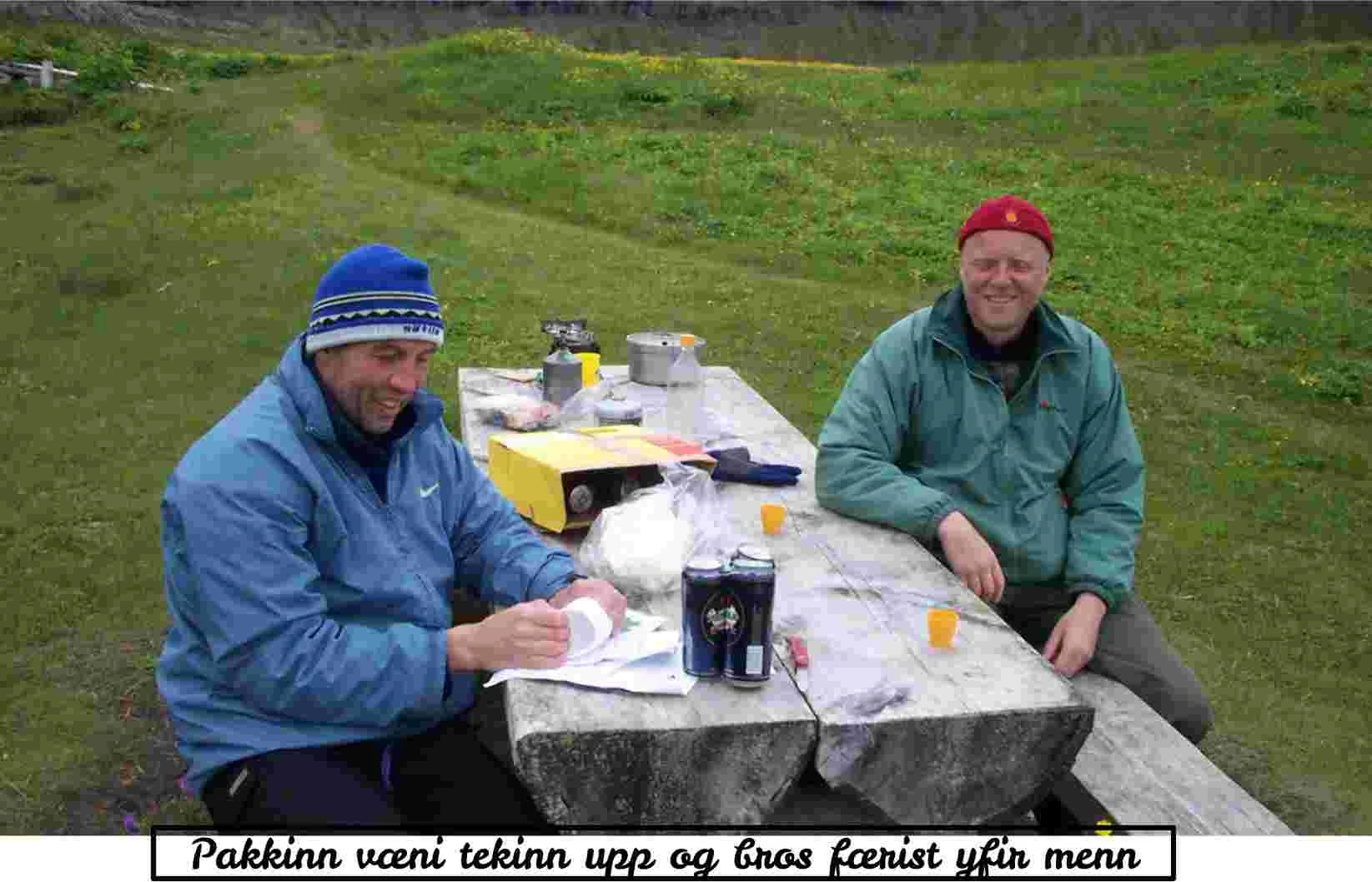
We announced ourselves to Sjöfn and Ragnar and inquired after Erla, craving meat soup. Erla was hiking with a group, but Sjöfn generously fed us herself. At the campsite we pitched our tents, and discovered a package addressed to Þorkell—delivered earlier by Jóni on the Sundhani—containing a case of beer, a testament to Þorkell’s excellent planning.
After soup, swimming, and long hours soaking in the pool, we went to bed somewhat worried by the poor weather forecast.
Saturday, July 27th
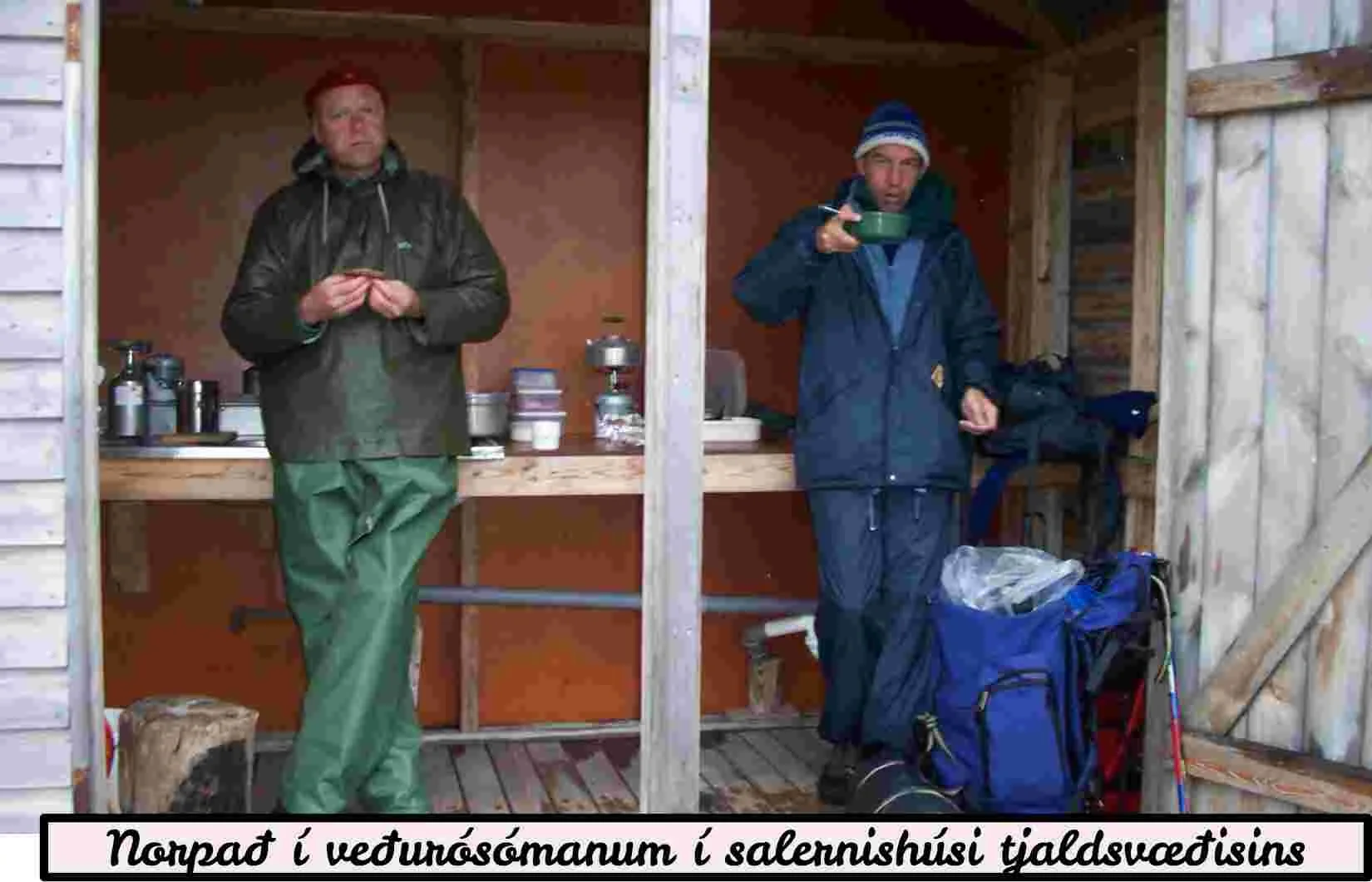
We awoke to cold rain and strong winds from the sea. It seemed unlikely the Sundhani could collect us in such conditions. We spent most of the day in the swimming pool to stay warm. Later we learned the boat was sheltering off Bolungarvík and unable to take passengers.
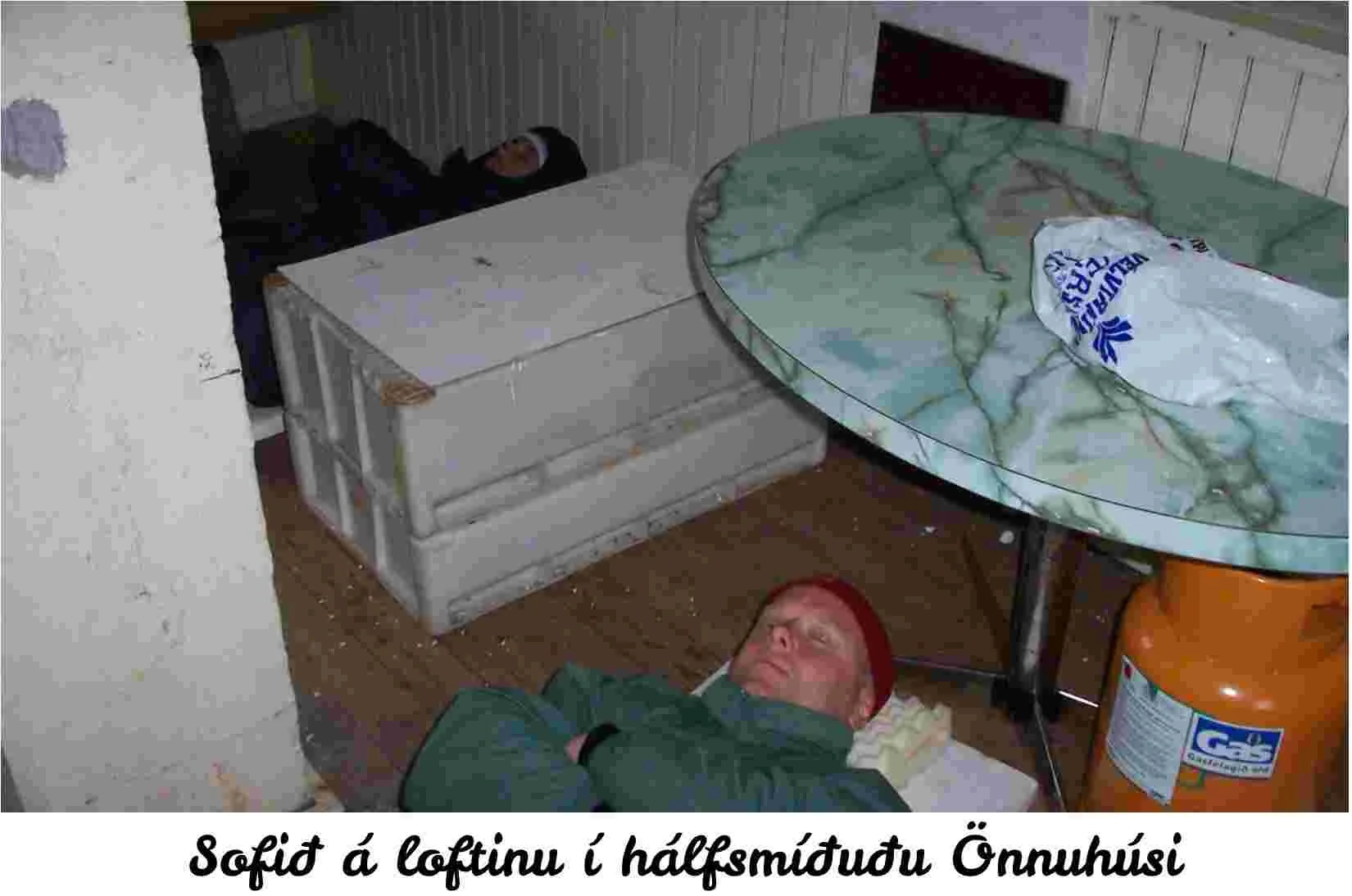
With a very low phone signal, Þorkell and I climbed Þoralátursnes and got lot better phone signal and reported our delay. That evening, a local man—one of the property’s heirs—offered us shelter in the loft of a restored house called Önnuhús. We gratefully accepted and slept comfortably on insulation boards.
Sunday, July 28th
The weather improved slightly the next morning. Running low on food, Ögmundur bought flatbread and cocoa from Sjöfn, and once again Þorkell’s foresight saved us with a spare food package.
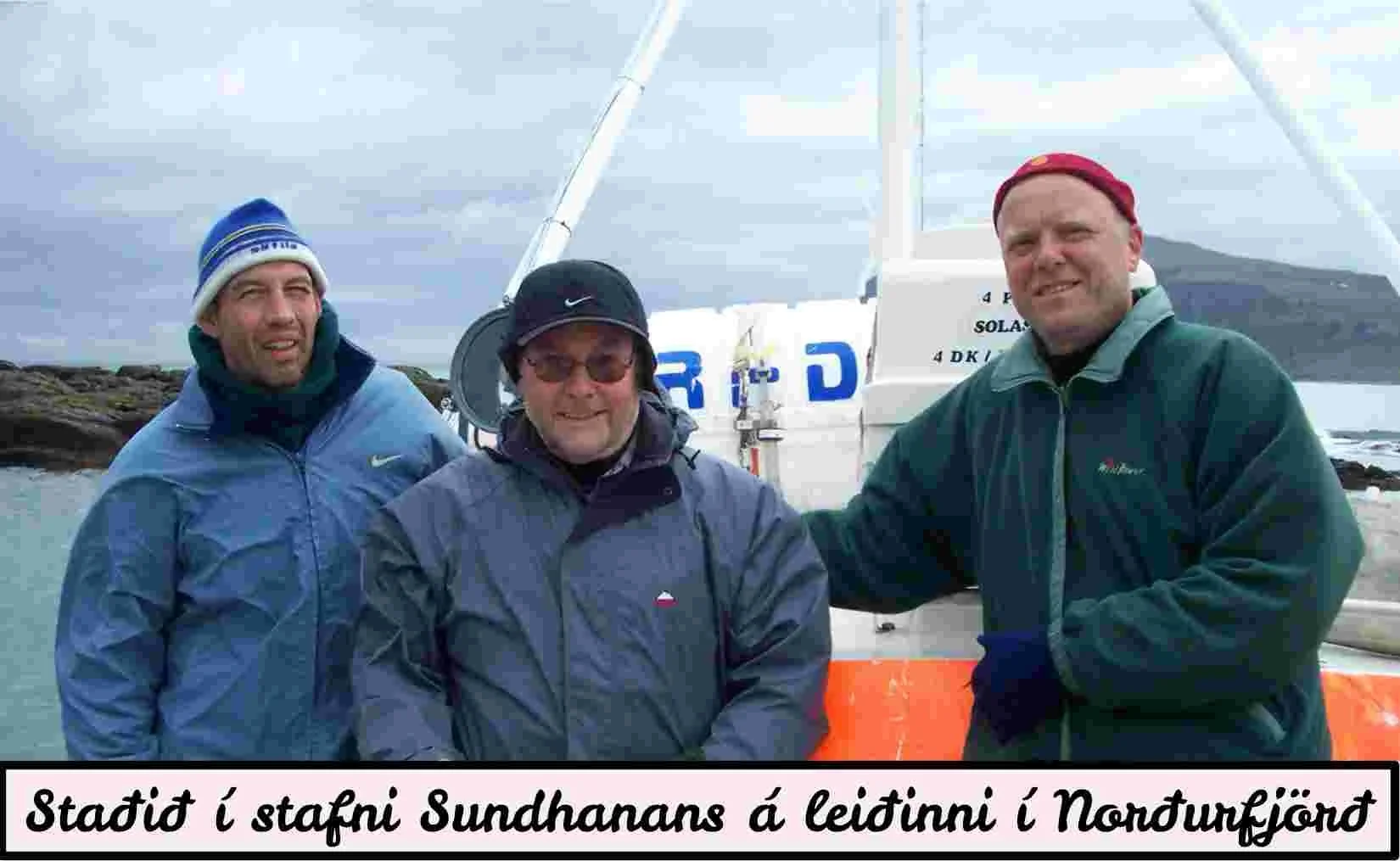
As we ate breakfast around ten, a young man appeared to tell us the boat was arriving. We hurried to the dock, overjoyed. The Sundhani arrived, and a dinghy ferried us aboard. Standing at the bow to avoid seasickness, we enjoyed a smooth two-and-a-half-hour crossing to Norðurfjörður.
The Musso awaited us, and we drove south, stopping at Svanshóll for coffee with Þorkell’s relatives and later in Hólmavík for a meal with his brother Þór and family. That evening we returned home to Garðabær.
To all who showed us kindness and made our journey more memorable, we extend our heartfelt thanks.
Thus ends this account.
Yours sincerely, Karl Valgeir